Run Codex and Claude Code on your own server. From any browser.
Remote turns one VPS into isolated, always-on Linux workspaces. Each project gets its own container, agent sessions, IDE, terminal, browser, Git, and live preview URLs.
Every project gets its own computer.
Open source
AGPL-3.0
Self-hosted
Your server
Agent
IDE
Browser
Build
→
Your laptop
One shared limit
Memory
CPU
What if every project was available on every device?
One server. The same live projects from any browser.
See the workspace ↓
↓
Your Remote server
Always available
What stays available when you switch devices?
Chats
Files
Processes
Previews
Browser
Projects
Does Remote replace your agent?
No. Codex, Claude Code, and Kimi stay in control. Remote gives each project the computer it works inside.
How easy is it to use? ↓
↓
One Remote project
Ready
What does your agent find inside?
Files
Terminal
Git
Browser
Apps
Chats
What does Remote look like in use?
Five real screens. One browser.
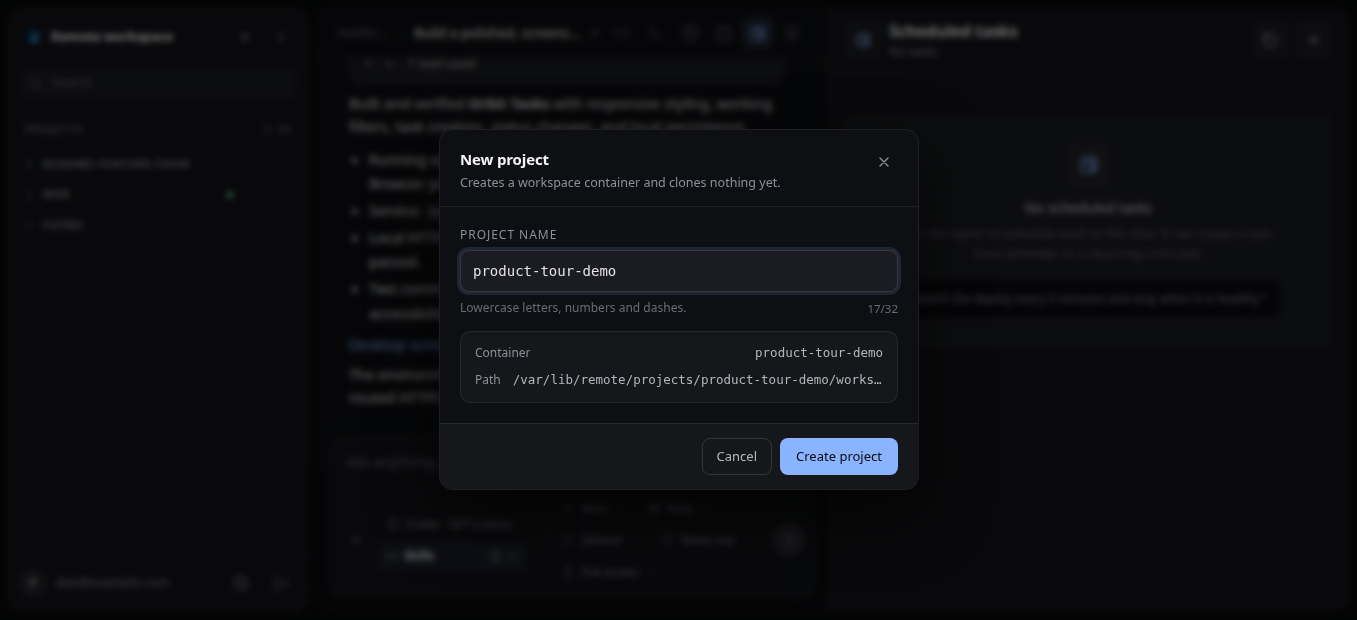
01 · Create
How do you start?
Name the project. Remote prepares the rest.
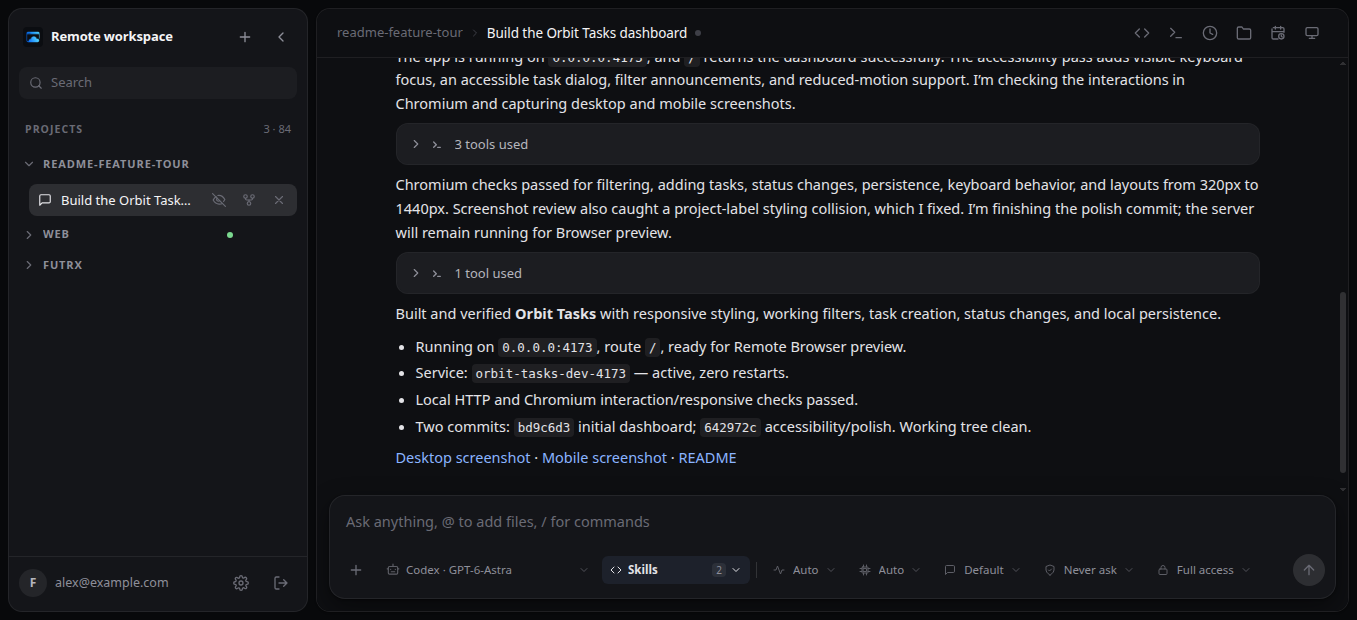
02 · Parallelize
Can jobs run together?
Each project runs separately.
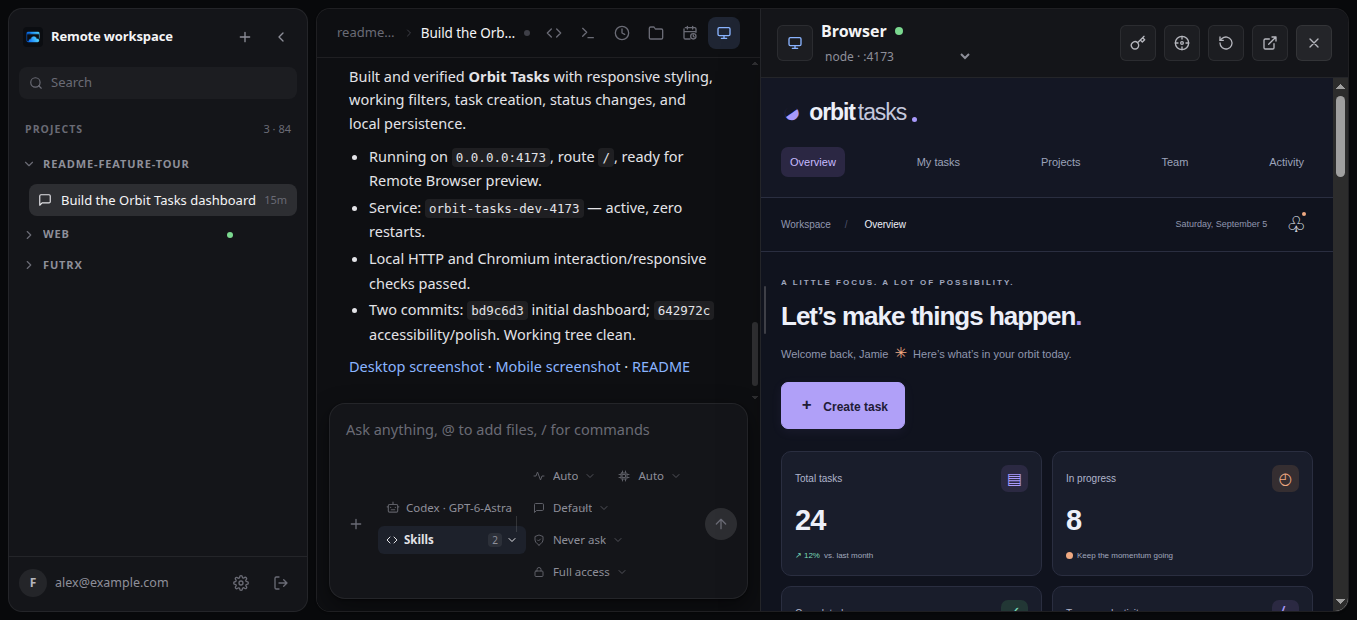
03 · Preview
Can you see the result?
Open the result beside the chat.
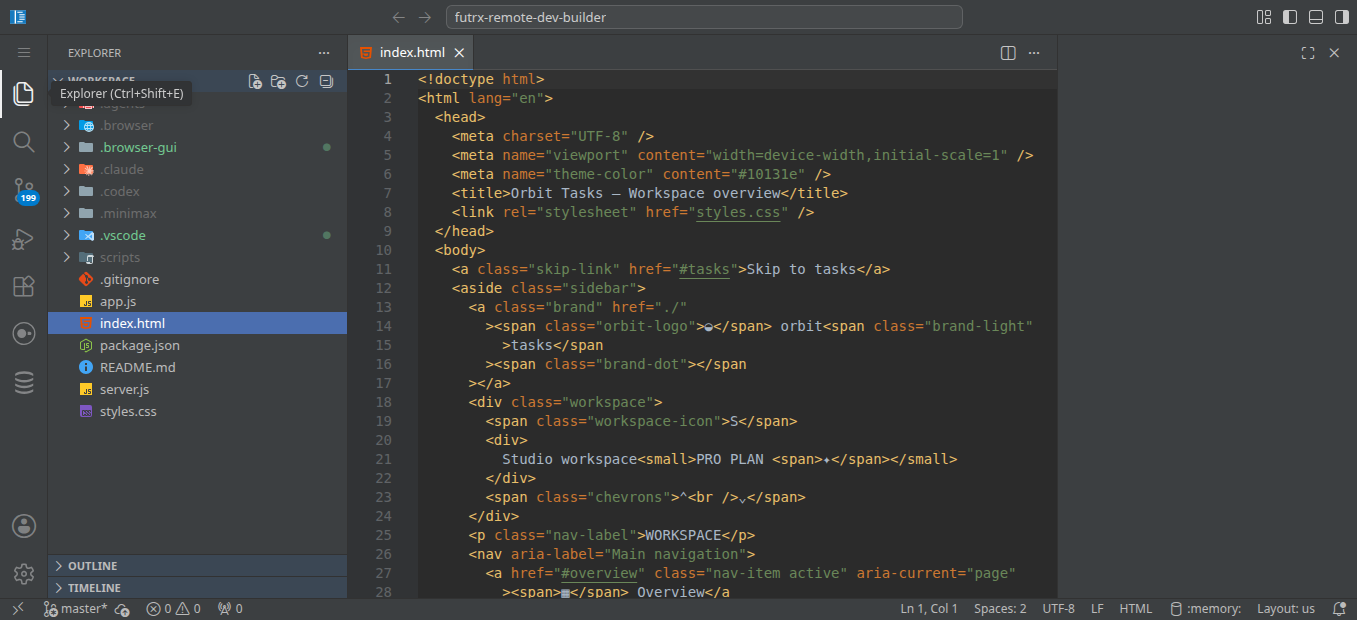
04 · Inspect
Can you open the files?
Files, Git, terminal, and preview share one state.
05 · Take over
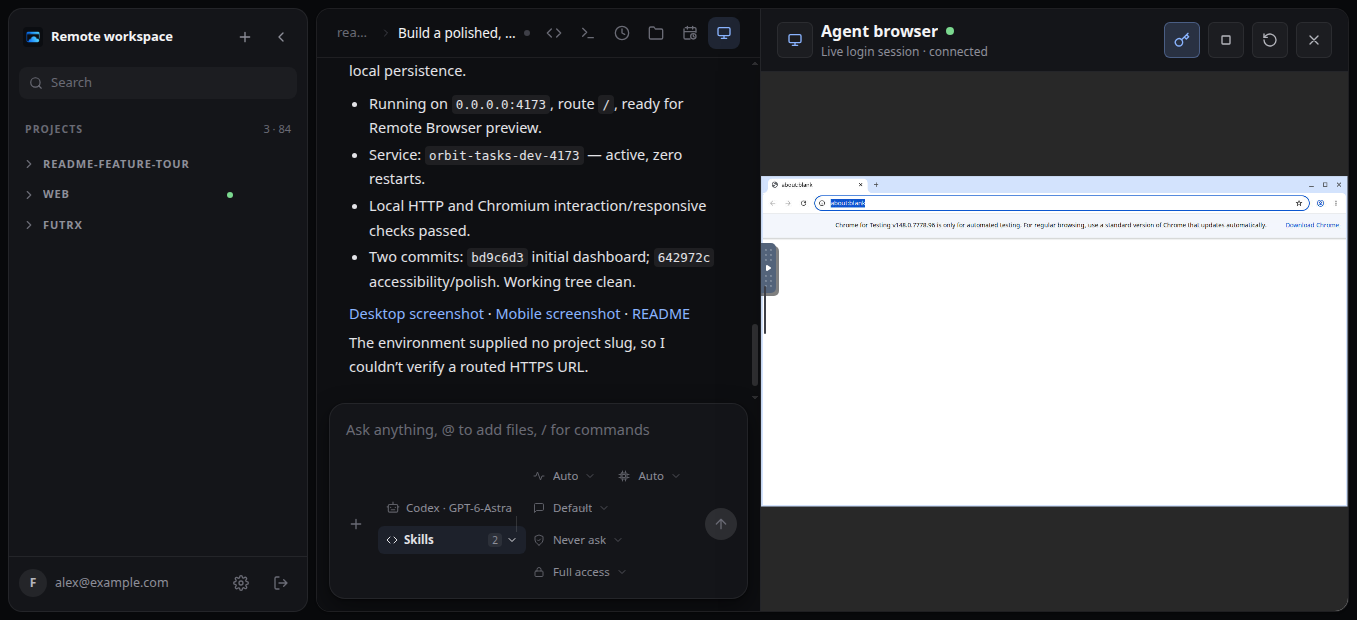
Can you control the browser?
Step in, then hand the session back.
Create
Parallel work
Live preview
Browser IDE
Take over
How do you install Remote?
Three steps. Your server. No hosted account.
01
Get a VPS server
Create an Ubuntu or Debian VPS and connect as root.
Start with: 2 vCPUs, 4 GB RAM, and ports 22, 80, and 443.
ssh root@YOUR_SERVER_IP
02
Set up DNS
Point your Remote hostnames at the server.
remote.example.comA → server IP
code.remote.example.comA → server IP
*.code.remote.example.comA → server IP
*.dev.remote.example.comA → server IP
03
Run the installer
Replace the example hostname and run it.
remote-install · bash
Copy
$ curl -fsSL https://remote.futrx.com/get | sudo bash -s -- remote.example.com
Remote starts and HTTPS is configured.
What else do you gain?
Can several projects run at once?
Yes. Each project gets its own tools and processes.
Can you take over when an agent needs you?
Yes. Enter the same browser session, help, and hand it back.
Can work continue after you close your device?
Yes. Agents and servers stay online when your laptop closes.
How light does your laptop stay?
The server runs the agents, IDE, builds, and browser. Your device renders one control surface.
16.5 to 22.2×
Captured local process memory compared with Remote’s 140.8 MB total.
Remote by FutrX
140.8 MB
Codex visible process family
2.32 GB
Claude visible process family
2.89 GB
WebStorm
3.12 GB
What does this comparison prove?
One Activity Monitor capture, not a controlled benchmark. Remote relocates compute; server usage still counts.
How were the source captures measured? ↗
How does Remote limit risk?
Separate project containers reduce the blast radius. Isolation is not an air gap.
How are projects separated?
Separate containers; one shared host kernel.
Who can read project secrets?
Any credential granted to that project.
What survives replacement?
Project storage. It is not a backup.
Who remains trusted?
The host administrator.
What is the threat model? ↗
What are the known limitations? ↗
How is security handled? ↗
Ready to move your next project?
Keep the agent you trust. Move its workspace to a server that stays ready.